BELLUM & Co.
← All projects

Project 02 / Selected Founder Experience

San Francisco Slow Streets Stewardship

Turning a citywide stewardship program into an actionable toolkit.

A visual toolkit translated technical assistance, funding, and community activation options into a stewardship system neighborhood groups could understand and use.

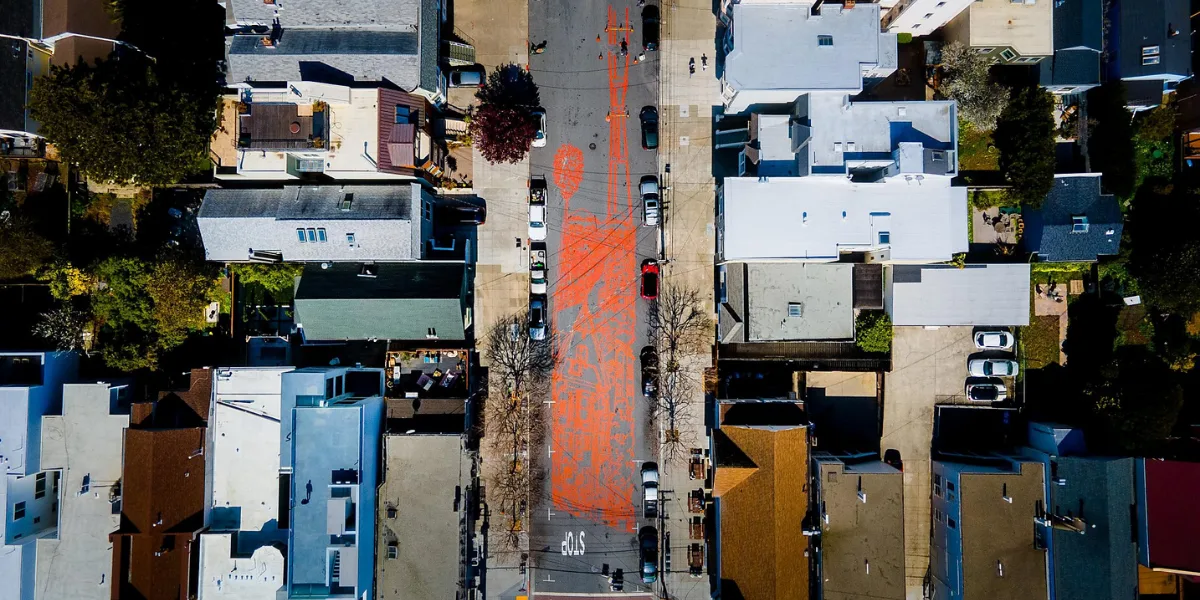
Aerial view of a San Francisco Slow Street with a large painted street graphic
Slow Streets stewardship translated temporary public space into a neighborhood-scale implementation program.Source: San Francisco Parks Alliance / rights review pending

Project record

Location
San Francisco, California
Project period
2021–2022
Organization
San Francisco Parks Alliance
Deliverables
Stewardship catalog, option menu, order framework, and program map

Stakeholders

01San Francisco Parks AllianceProgram organization and employer during this work
02Neighborhood stewardsIntended users of the catalog and program map

Project context

The project in context.

San Francisco Slow Streets created more room for neighborhood use, but stewardship choices differed from street to street. Local groups needed a plain way to see what improvements and support were available, and what each choice would require.

The catalog and program map organized those choices into a visual menu with a points framework. They helped turn a broad citywide program into a set of decisions that neighborhood stewards and program staff could discuss together.

01 / Challenge

Convert broad support into choices people could act on.

As Slow Streets moved beyond its emergency-pandemic origins, neighborhood stewards needed more than a program description. They needed to understand what kinds of public-realm improvements were available, how technical assistance worked, and how limited resources could be allocated.

The core communication challenge was to make a citywide program specific enough for neighborhood decision-making without suggesting that every street needed the same solution.
02 / Contribution

A visible menu, budget logic, and implementation path.

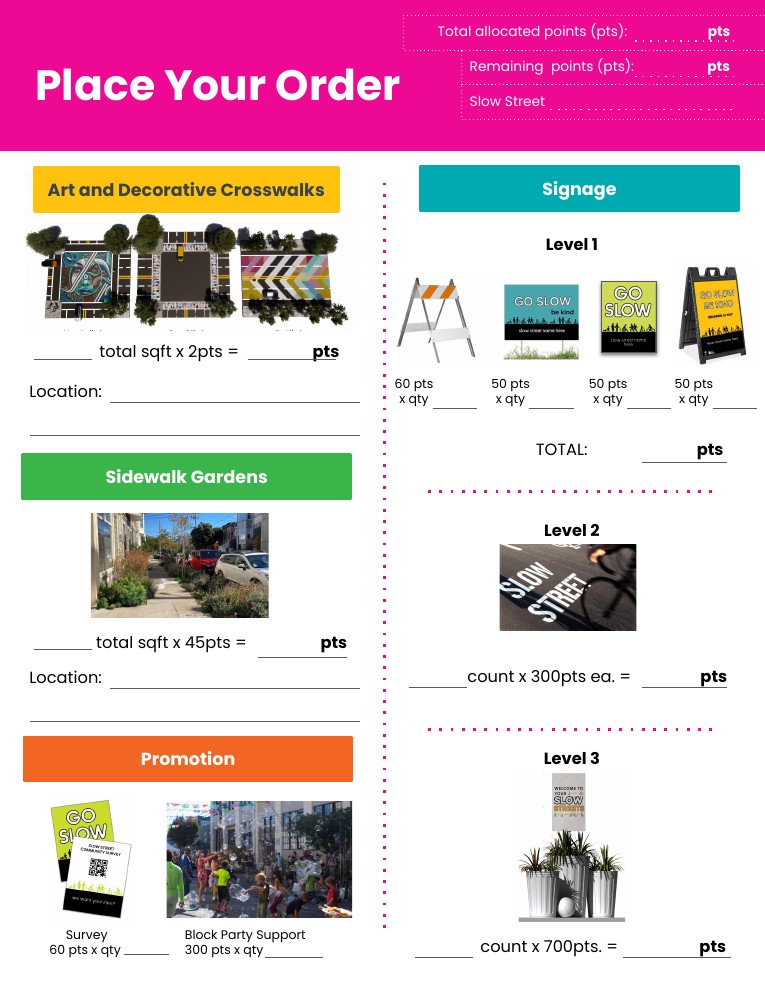
Working as a Capital Project Manager for the San Francisco Parks Alliance, the founder created the visual stewardship catalog and program map. The catalog organized improvement types, technical-assistance levels, community activation options, and an 8,000-point selection framework.

The result was a shared decision tool: neighborhood groups could compare options, understand tradeoffs, and communicate a more coherent request to the program team.

How the work moved

Connected workstreams, one project story.

01

Program structure

Organized a wide set of interventions into a consistent menu with comparable levels of support and resource implications.

02

Community enablement

Used plain language, visual examples, and a points framework to make program choices accessible to neighborhood stewards.

03

Implementation pathways

Connected ideas such as signage, planting, play, art, and activation to defined order and technical-assistance steps.

The stewardship catalog

Flip through the catalog.

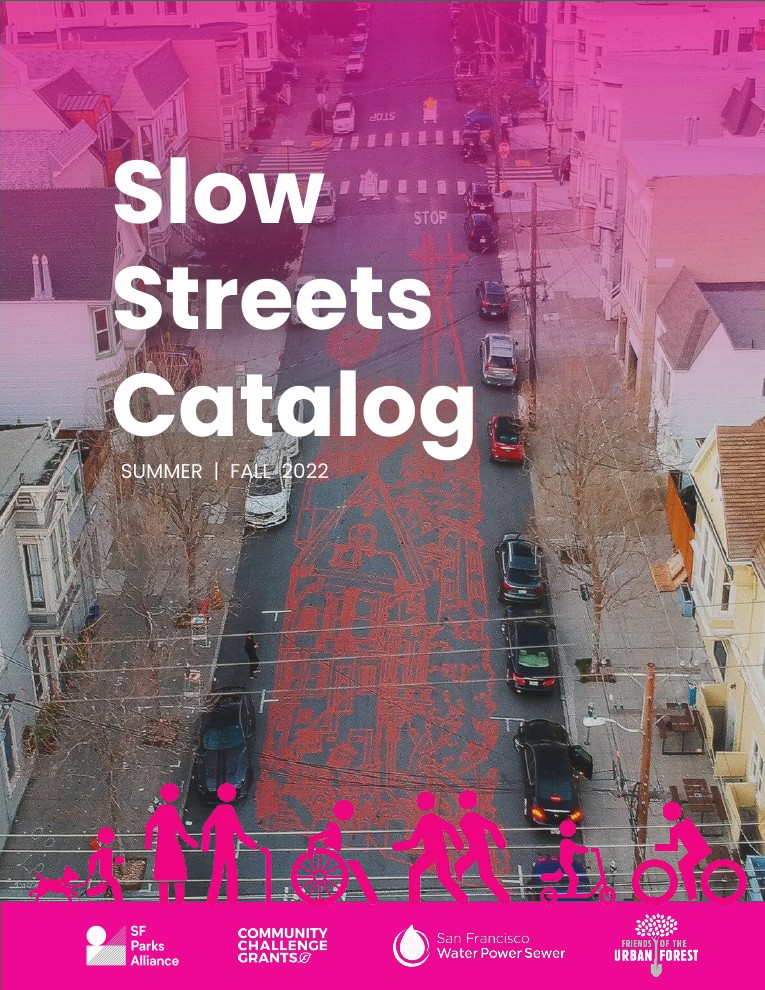
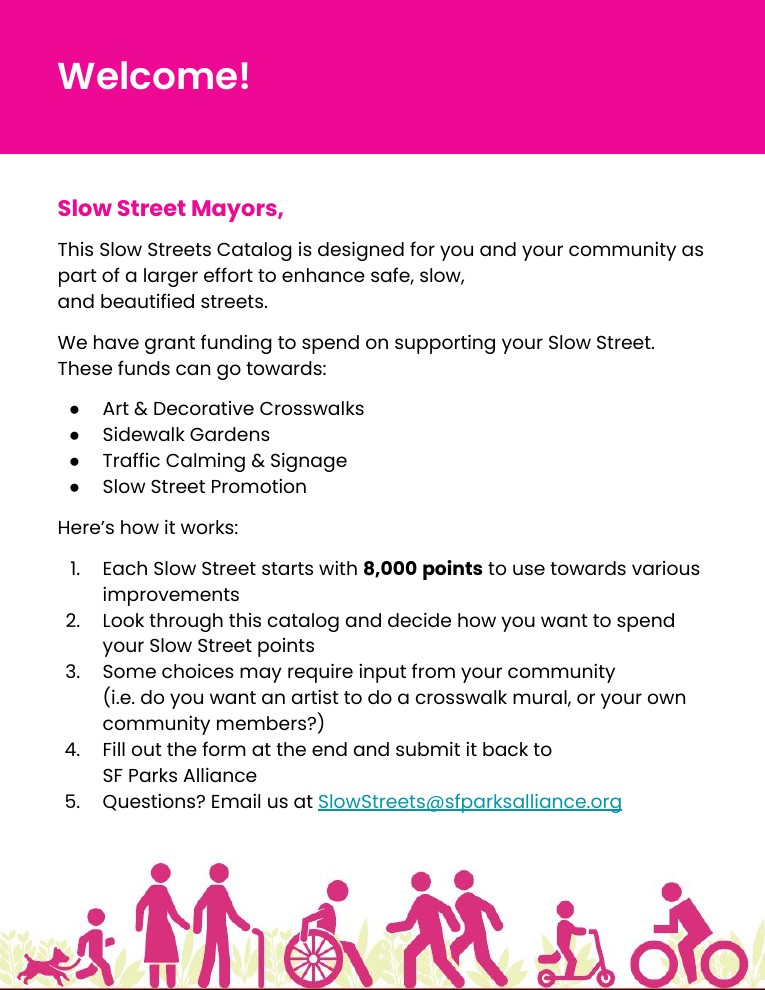
The Slow Streets Catalog organized improvement types, technical-assistance levels, community activation options, and an 8,000-point selection framework into a visual menu neighborhood groups could use. Four of its pages are previewed here.

Page 1 / 4

Cover / Slow Streets Catalog, Summer–Fall 2022

Cover / Slow Streets Catalog, Summer–Fall 2022
Welcome / how the 8,000-point program works
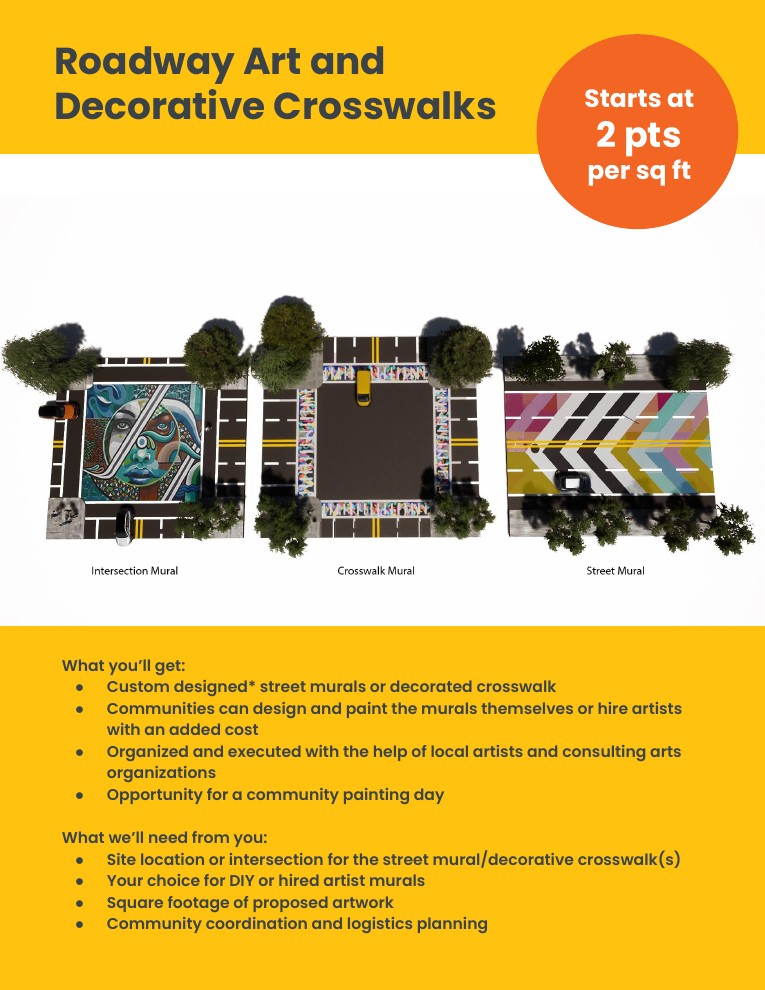
Roadway art and decorative crosswalks
Place your order / turning choices into a request

Outcome

A program became something neighborhood stewards could navigate.

The catalog and map created an actionable stewardship system from a complex set of funding, technical-assistance, and activation choices. It gave program staff and neighborhood groups a common artifact for discussing priorities and next steps.

The catalog was one part of the broader Slow Streets program, a citywide effort involving many partners.

Related services

Project inquiry

Have a project that needs a clearer path forward?